21 January 2013
Arrested Development

Friends
This artifact doesn't tell very much about human purpose. From what I watched, the main thing it said was that humans are meant to live in community. They are supposed to be with and love people. All the characters show this very well and continue to live with each other, even if they are mad at each other. I think that watching this show makes me realize few things about evil. I realized how often sex is referred to and actually happens in a lot of tv shows and movies. Not only is it Joey, the friend who "dates" lots of women, but every single of the friends in the show have had sex before they are married. I also noticed how all the women in the show that Joey "dates" are beautiful, but very skinny. Actually, almost all the women in the show are skinny. The redemption comes when they are in community. They give each other support and try to help each other do the right things, not only in the episodes that I watched, but in all of them.
Why are there no people of color in the friend group shown? Why is it socially accepted that sex before marriage is okay and can be shown to the younger generations of the world?
The Majestic Mountains
Cultural Artifact 2: The Great Gatsby (Book)
The nature of sin in The Great Gatsby is evident in the affairs that Tom and Daisy have; both of them are rich and feel entitled to being able to do whatever they want. The nature of sin is also seen in Gatsby's life. Gatsby has these extravagant stories that no one knows if they're true or not, so some people hate Gatsby while others love him for the lavish parties that he throws. The parties and stories are used to cover his insecurities and to make himself seem better for the Daisy. Within Gatsby and Daisy's affair there is sin on many levels because of the sexual aspect of the relationship, as well as Daisy being interested in Gatsby because of his acquired wealth not because he is a good person. Redemption can be seen in Gatsby because of his only motive for living is to win Daisy's heart. Even though this is a shallow reason for living, it makes the reader pity Gatsby and want him to win because he's the underdog. Nick is redeemed when, at the end of the novel, he returns back West because of the amount of corruption within the socialite life. Nick understands that life is valuable and emotions are not to be trifled with and doesn't want anything to do the life that he was living in the East.
This novel reveals many things about the Empire. The main point about the Empire in the Great Gatsby is that the Empire sucks you in and spits you out worse off. The Empire wants you to consume its goods mindlessly like the people that were "friends" with Gatsby did. All of Gatsby's "friends" were there to drink all of his booze and do outlandish things at his parties, they didn't care about the emotions and deeper aspects of Jay Gatsby, just that he had money to spend on things of the Empire. The Kingdom is shown in The Great Gatsby within Nick who is the moral compass of the group of characters. He tries to make things right between everybody, and after failed attempts, leaves West Egg to live a life that he can be proud of in the Western United States.
1. Is Gatsby ever redeemed during the novel?
2. Is Daisy at fault for Myrtle's death, or it is simply a coincidence that her husband's lover was the people she hit?
3. Does Nick succeed at being a moral character?
Redeeming a Sinful World
20 January 2013
Undercover Boss: Cultural Artifact #2
I watched a episode starring one of the biggest names in golf, Taylormade as well as the companies CEO (Mark King). Mark is a divorced 53 year old with two daughters ages 16 and 20. During the beginning of the episode, Mark spent time doing homework and talking with his youngest daughter. I could see how much Mark valued his daughters and how important family was to him despite being divorced. He expressed optimism towards his past divorce because his past marriage brought his two daughters into existence. I think family is too often taken for granted amidst the chase for materialistic things. Despite being the CEO of a large corporation, Mark still kept his family as his top priority through ending his day at 5 every evening to invest his time in his family. Divorce is always viewed as a bad thing in society, but good came from Mark's past relationship. Mark brings redemption to his family by creating relationships with his daughters and maintaing a family despite the loss of one member.
One of Mark's employee's dropped out of college at 19 to help fight his uninsured mom's financial battle against skin cancer. When Mark discovered the sacrifices his employee made for his family, he was hit hard. Mark choked up and shed a tear as he imagined what it would be like for his own children to sacrifice their future for him. Later on the employee was in shock when he found it he was training his very own CEO. Mark recognized a need in someone else's life and he provided financial resources for his employee to go back to school as well as paying for his mother's medical bills. Cancer presented itself to a mother, and Mark helped to redeem a family after a large financial loss.
1. Corporations are often times too large to know their employee's personal lives, but how can they show appreciation towards all levels of employee's in their business?
2. How can God's kingdom be advanced through customer satisfaction between a company and a consumer?
Cultural Artifact 2 | The Words
Macklemore Is Poppin' More Than Tags
Macklemore (Formerly Professor Macklemore) is the stage name for Ben Haggerty. Haggerty is an American rap artist who has been releasing music since 2000, but whose popularity has risen significantly in the last few years. His most recent and most popular single "Thrift Shop" has almost 60 million hits on Youtube. Macklemore is an artist who boldly creates music regarding issues such as consumerism, homosexuality, and the destructive mass media culture America lives in.
I would like to bring to light Macklemore's song, "Wings" because its lyrics have to do exactly with what we have been examining in class- the dominating consumerism culture within America.
Here is the link to the music video:
Wings: http://www.youtube.com/watch?v=gAg3uMlNyHA
"Wings" is a real life throwback told through the eyes of Macklemore as a child growing up in the 90s. The lies of the empire that name brand logos are what define us and that in order to be cool and fit in one must succumb to the price tags of the most expensive commodities are experienced first hand as young Macklemore lets his Nike shoes become his very identity. Macklemore gives voice to one of the ironic foundations of the empire, that when we buy things in order to "stand out" and be "our own person" what we are really doing is simply verifying that the empire has captivated our imaginations. This realization is prominent in lines such as
"I'm an individual, yea, but I'm part of a movement
My movement told me be a consumer and I consumed it
They told me to just do it, I listened to what that swoosh said"
The kingdom is ever present in this work as Macklemore grows up and the song begins to be told through his current eyes; Macklemore challenges everything about the culture around him. He admits that he feels "strangled by these laces" and the oppressive consumerist mindset of the world surrounding him. He mocks the media who suggest that he isn't allowed to crease his shoes or even take them out of their box for fear of dirtying them.
I think the most prevalent display of the Kingdom in this song is found in the lines:
"But see I look inside the mirror and think Phil Knight tricked us all
Will I stand for change, or stay in my box
These Nikes help me define me, but I'm trying to take mine, off"
Macklemore is downright treasonous when he names Nike's founder as an agent of the empire and after wondering to himself whether he will dare to take a stand and make a change in his life, symbolically declares that he wants his Nikes off. Macklemore wants his imagination liberated.
Macklemore suggests that in America we are raised as slaves to the empire of consumerism. He talks about his first-hand experience with the pain that obsession with commodities causes. He challenges the motives of the corporations selling us our "dreams" and goes so far as to call one of them out by name. He admits his on-going struggle with prioritizing "stuff" over what is really important in life. Is this not exactly what we have been doing in class? Macklemore is not a Christian, but I think God is nevertheless working in him to give voice to the Kingdom.
Why do you think Macklemore singles out the Nike corporation in his attack on the consumerist economy in America?
Do you think that God uses non-Christians to bring light to his Kingdom?
Why do you thing Macklemore begins this song through the eyes of a child? He also uses a children's choir to sing the chorus of this song, what impact does that have on the meaning of the song? What impact does it have on us, the listeners?
Cultural Artifact 2- Crash
The movie Crash provides a beautiful narrative of a 36-hour struggle of hate, disgust, prejudice, heroism, forgiveness, fear, love, sacrifice, and discrimination. The star studded cast of the film tells the stories of officers of the racially motivated L.A.P.D, the white district attorney of Los Angeles, a black detective, a black film director, a Persian shop owner, and a Hispanic working-class lock repairman. In a twist of fate decisions are placed before each character depicting how we shape our lives and the lives of others by our hermeneutic. This powerful film won the 2005 academy awards for best picture, achievement in editing, and best screenplay, as well as 50 other awards and 74 nominations.
In this movie great pain was shown by all of the characters. Because of this, lives were saved and lost at the same time. We were shown that indifference to equality on any level is avoidable for only so long and that motivations really do matter. But it is the result of the crash between volatile cast that cuts to the core of the humanity that supersedes us all. It is such that is a resultant of referencing the Kingdom of God, the singularity and universality of morality. Power, raw and to some degree, infinite in scope is shown to us in both the good and the bad. We are shown that we always have a choice and that those choices always matter. The praxis of each character was never simplistic, it provided questions for examining our heremeneutical foundation and how it came to be. It is for this that the Kingdom is being called in this film, there is a calling to view specifically human beings with equality regardless of what we consider contingent circumstances.
John Mayer: Continuum
Discussion questions:
1. What kind of music do you listen to and do you ever think about the lyrics and the song's meanings?
2. Is it even possible to produce music that reveals life through the kingdom of God that the general audience will find it attractive? Why or why not?
19 January 2013
Simple Times | Joshua Radin
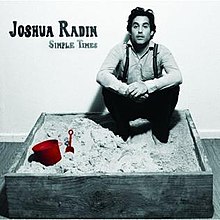
- Is our view of love distorted as a people? Are we too centered on romance that we cannot focus on anything else? Is this “romance” that society presents to us even a true representation of the beautiful process of two people finding each other and falling in love?
- Are simple times really so far in the past? Or have our eyes and minds just been opened to the pain and suffering in the world as we got older?
The hope in the midst of imperfectness (Cultural Artifact 2)
 The movie Mary and Max is a ‘claymation’ –
animation made out of clay – film of Adam Eliot. The story was based on the
true account of friendship between Adam and his pen pal, who lived in New York.
For almost 20 years, Mary and Max had been exchanging letters each other,
telling about their life stories, which sometime would made them encouraged,
and sometime the letters would drive them to tragic depression and
disappointment. One thing that they have in common is the fact that they are
both social outcast. Mary Daisy Dinkle is a friendless eight year old girl,
with her only ‘friend’ rooster Ethel. Her mother is an alcohol addict, and her
father works in factory during most his day. She has brown eyes and birthmark
on her forehead that looks like poo. Max is a 44 year old Jew, who has Asperger’s
syndrome (sort of mental disorder), and his different way of perceiving the
world around him puts him in socially disabled person. Max loves chocolate
hotdog and attends Overeaters Anonymous, which is his only social interaction. He’s
particularly frustrated with the people who litter on the streets. He believes
that they should be heavily fined, but it’s only his thought that nobody cares.
The movie Mary and Max is a ‘claymation’ –
animation made out of clay – film of Adam Eliot. The story was based on the
true account of friendship between Adam and his pen pal, who lived in New York.
For almost 20 years, Mary and Max had been exchanging letters each other,
telling about their life stories, which sometime would made them encouraged,
and sometime the letters would drive them to tragic depression and
disappointment. One thing that they have in common is the fact that they are
both social outcast. Mary Daisy Dinkle is a friendless eight year old girl,
with her only ‘friend’ rooster Ethel. Her mother is an alcohol addict, and her
father works in factory during most his day. She has brown eyes and birthmark
on her forehead that looks like poo. Max is a 44 year old Jew, who has Asperger’s
syndrome (sort of mental disorder), and his different way of perceiving the
world around him puts him in socially disabled person. Max loves chocolate
hotdog and attends Overeaters Anonymous, which is his only social interaction. He’s
particularly frustrated with the people who litter on the streets. He believes
that they should be heavily fined, but it’s only his thought that nobody cares..jpg)
17 January 2013
The New Normal? Hopefully...

Questions:
Would you say that America, or even Calvin College is trying hard enough to understand homosexuality? What is something that you would do to get more information?
Do you believe that the Kingdom of God is everywhere? (In everything and every person?)
20 January 2012
Escape to Web-Print

2: What is the Apocalyptic aspect to Escapism? Where can we find, ironically, a non-escapist aspect to it?
Dancing With Dinner
Paper Heart
The premise of this film is that Charlene Yi is traveling around the country to either prove or disprove the existence of romantic love, as she does not believe in it. In so doing, she meets Micheal Cera and the two begin to develop a relationship. The film is lighthearted and fun the whole way through.

This artifact comments on everyday occurrences within the context of relationships--from the first meeting, to the development of friendship. In this case, the relationship is presented in a realistic, down to earth way. This film emphasizes the importance of community and friendship, as well as imagination. When taking a further look into this film, I am left wondering why the word 'love' is only used (with one exception) in the generic and romantic sense. The fact that believing in love, or not, depended on researching and interviews the romantic love shared between two people, and not another ultimate example of love did not leave much room for faith. The one time a different 'type' of love is explored is in one scene that takes place in a biker bar, where the bikers discuss the role of love in friendship. Overall, it was a look at the developing romantic relationship between (as fictional versions of themselves) Micheal and Charlene as well as young and old couples 'interviewed' throughout.
One way that this romantic comedy broke the cookie-cutter mold of the genre is that there is no personal catastrophe. No one is a damsel in need of being 'saved' by love, and no one had to give up something for the sake of monogamy. Rather, it is a story of two equals spending time together and (slowly) learning to love each other. While I do believe that expressing love without an example of ultimate love through Christ is, ultimately, missing the point, this is a more honest look at human interaction than has been presented in past films of its type.
1. Why does our society idolize dysfunctional relationships in films?
2. Why do people treat each other differently when they know they are being watched? Is this a positive thing?
Paper Heart directed by Nicholas Jasenovec (Lakeshore, 2009), DVD
Teen Vogue/Artifact 2
The stories that Teen Vogue tells about human purpose is that even though we are made in God's image, there are products that make you look more beautiful. In the magazine, there are millions of ads that catch our eye, including name brands and beautiful models. It's hard to go through a magazine like this and not get caught up in the fashion or make up that's in it. Even though this magazine may seem like another way to sell advertisements, they do include serious issues as well, in the issue I read it had an article on smoking and what it can do to your body. However, it was only a couple pages long, while the rest of the magazine still covered make up and fashion.
Teen Vogue reveals about life in the empire is that there are things in the world that we tend to get pulled into and believe that we must have a certain product to make us feel good about ourselves. The magazine shows pictures of different models, and then has several pages with similar clothes that they are wearing, and how much it would cost to buy them. It seems that every day there is some new trend going on, or a new line of clothing or make up has just come out, and we have that urge to immediately go out and buy it because we know everyone else will already have it. It's difficult to fit into society, or the empire, without having the latest thing that's out there because then you feel left out and not on the same page as everyone else.
I personally don't wear make up at all, and the most I'll wear is just a touch of mascara. For me, make up just isn't a big deal. I don't see why I need to change myself when I'm perfectly happy with the way I look.
Discussion Questions:
1. Why do we feel the need to fit in with the rest of the world?
2. Do we ever ask ourselves "Do I really and truly need that?" before we buy something? Or do we automatically buy it because it's what everyone else has?
Supernatural
The second cultural artifact I have decided to choose is the show Supernatural. Supernatural first aired september 13, 2005. The Story is about two brothers named Sam and Dean Winchester. The episodes are about these two brothers as they hunt demons and other monsters that are of the supernatural, hence the title. This show portrays evil in hell is not locked by heaven anymore. Demons and monsters are on our world. The human purpose as we know is to live in Christ’s image, but on this show the human purpose is to be destroyed by the demons. Evil is always around the Winchester boys. I think that they are not being influenced by the empire, because the empire wants the perfect American life. You go to school, get a job, get married, have kids. But This life can never be for the Winchester boys. They know what is actually out there. and their destiny is to fight of the evil. Dean has always struggled with religion he does not believe in god, and if he did he calls him a “big kid with a magnifying glass, and i’m the ant.” But in the later seasons dean is a mess he keeps reliving all of his horror that he has done in his past, what he has seen, he prays to God for redemption to cleanse him, to ask for help. In the later of the episodes they interact with angels and these angels are angry with the Winchester boys, because they stopped the apocalypse from happening when it was supposed to. The angels also say that God has gone away. they do not see him anymore, almost as if he had given up. But i believe something extraordinary is going to happen. I sometimes feel that a lot of us feel that way. When we are in need and something that we ask for does not happen, or when we are in despair, we feel like god has gone away and doesn't care about us. but we know as Christ followers that is simply not true. God is always with us. This show does a good jib of showing the evil the good and the redeemed in our world today.
1.Do we sometimes feel that God has left.
2. How can we fight the evil in our own life's.
Dinner Dance Partner
Joel Salatin has committed his life to a "land healing ministry." He claims, "I am a caretaker of creation; I don't own it." He believes it is his responsibility to step into creation as land stewards and redemptive embassadors and embrace it as a dance partner. We need to appreciate our invisible dependent creation. This statement is so applicable to many aspects our lives. This includes the invisible microorganisms in soil, the invisible trillions of cells in our bodies, to the invisible God that created the universe. We don't realize the tremendous power and creativity of our Maker until we study what he has created. We are called to take care of this earth and enjoy it in its natural original beauty. This is what God called us to do, he cares about His creation. In the words of Joel Salatin, "God is interested in the pigness of the pig."
Studying this cultural artifact has sparked an interest in this topic of caring for creation. There are many practical ways, that we as Christians, can participate in a system that does good and allows us to participate in the Kingdom.
Discussion Questions:
- In what ways does the distorted view of creation and animals extend to our view of other humans?
- Where else in creation do we witness the amazing design of our Creator?
- What are ways we can be stewards for God's Kingdom?
Tim Tebow
Tim Tebow is no stranger. Over the past year, Americans have become very familiar with his face, his style, his stats, and also, his faith. Some fans are refreshed by the character that Tebow brings to the NFL – namely, his outspoken and unforgiving belief system otherwise unfamiliar to the game. Still, others exemplify great disdain for this Evangelical, questioning the legitimacy of his faith and ridiculing his over-the-top antics. So what's apocalyptic about Tim Tebow?
For one, there's no questioning his ability to play football. Many sports fans will disagree with me, arguing that ultimately quarterback (insert name here) is better than Tebow. I don't wish to argue that and seeing as I don't know much about the NFL you're probably right. Nonetheless, Tebow is a professional at what he does, a title that cannot be stripped from his talent insofar as he continues to play. The point is, this quarterback can and is pushing his body to its limit. Throwing a ball 80 yards into the hands of another player involves a technical set of skills. As we admire Tebow's ability to QB we are offered a very unusual and unique glimpse of God's image. In addition, Tebow is very involved with the Make-A-Wish Foundation, spending entire days with mentally disabled fans and their families. Argue all you want, but the fact is that this celebrity hasn't completely checked out, yet. Tim Tebow is an apocalyptic figure in more ways than one.
However, that's not the end of the story. Ironically Tebow's very public attempts at spirituality are what make me less convinced of his sincerity. In fact, after all we have learned in this class, that Tebow has to nerve to thank God for defeating another team in the middle of a stadium and a career literally fueled by the empire (consumerism) seems a bit hypocritical. The Jesus of the NFL is a Jesus who doesn't care about the poor. The Jesus of the NFL is a savior of "our sponsor." The Jesus of the NFL is more concerned about signing $11 million contracts than helping the homeless man outside the stadium. If Tebow wanted to send a Kingdom message he could start by being a voice or reason during lockout season (an exceptionally terrific example of consumerism and greed). With the type of power he has, Tebow could be an incredibly influential voice and Christian example in calling the Empire into question, particularly in his job-field. I guess all we can do is keep waiting for that to happen.
Thus, with a grain of salt and a measure of grace, I have to conclude that Tim Tebow may not be as good a role model as society has dressed him up to be. While I applaud his volunteerism and commitment to the Gospel(s), it seems like he is stuck in a pickle between the Christ of the poor and the Lord of the market. In an attempt to squeeze in both he has diluted one and the expense of the other. Nevertheless, it will be interesting to watch how he continues to integrate his faith throughout the rest of his career.
Discussion Questions
1. Do you think the act of "Tebowing" (bowing your head and taking a knee in prayer) is appropriate in end zones? What does such an intentionally public act reveal about Tebow's motives (for better or worse)?
2. Do you think cultural icons of faith should announce their religion publicly? Do we need to label Tebow "Christian" in order to appreciate the good that he does?